More and more American parents are choosing to educate their children at home. What accounts for this trend? Reasons include faith preferences, the individual approach to education, and a desire for a stronger family unit.
Embarking on homeschooling can offer moments of great satisfaction or moments that push your limits, typically involving a mix of both. How do you ascertain if homeschooling is a good fit for you? What are the strengths and weaknesses associated with homeschooling? Read through these pros and cons for parents and kids to learn more and help you make your decision.
When you've made the decision to homeschool, where do you start? This guide from Sonlight Curriculum explains the pros and cons of a home education lifestyle, offers free resources, and has a How to Start Homeschooling checklist to help you connect with other homeschooling families, create your homeschool vision, and choose curriculum.
When you have a special needs child, no public school will ever be able to fully cater to their needs. Private schools do exist for many types of special needs, but they can be expensive and often still not fully adapted to your child’s specific situation. Therefore, you might find yourself wondering how to get your child the education that they deserve in a format that works for them. Homeschooling a special needs child is a very advantageous choice for many parents who can afford the time and resources to do so. A homeschool program will allow children with special needs to have their specific needs addressed and also avoid many obstacles that they would face in a traditional classroom. When it comes to children with learning disabilities or other severe impairments, sometimes a parent who understands their special needs is the only one who can teach the child.
Many parents choose to teach their children at home, instead of enrolling them and making them study within the formal settings of public or private schools. With homeschooling, the parents take full responsibility of their children’s education. It is intense parenting, as parents spend more time with their children, doing the hard work and having the patience to educate their kids. Mitchell Stevens, a Stanford professor who wrote Kingdom of Children, a history of homeschooling, reveals that homeschooling, which was used to be popular in rural areas, is now being practiced widely in America’s cities as well, with children of secular, highly educated professionals as students. Advances in digital learning and availability of resources over the internet also make homeschooling easier and more effective than ever.
While most parents just expect and plan to send their kids to a public school, a growing number of American families are re-envisioning their education philosophy, deciding to teach their children at home. And indeed, there are several advantages to homeschooling, including more family time, using your preferred curriculum, safety, learning at their own pace, and more quality time.
Homeschoolers are often asked about why they homeschool. This veteran homeschoolers has come up with her top ten reasons for homeschooling: education, freedom, family and love, morals and values, independence, socialization, health, passion, creativity and imagination, and play.
A list of the advantages and benefits of homeschooling for children, parents, and families.
Explore some of the history of the homeschooling movement, why some parents choose to homeschool, the basics of homeschooling, and more. The article includes some homeschooling statistics and demographic information. Also included is a discussion of the influences of Dr. Raymond Moore and John Holt on the emerging homeschool movement.
This New York Times articles is written by a veteran homeschooler who explains that home-schooling has a significant advantage in combating the pressure schools place on children, including better use of time and high quality academics.
When 13 year-old Logan LaPlante grows up, he wants to be happy and healthy. He discusses how hacking his education is helping him achieve this goal.
Families have various reasons for homeschooling. By examining your own reasons, your relationship with God, and your goals for your children, you'll will find your direction. Reasons for homeschooling include faith reasons, educational reasons, and relational reasons.
Most people who have never met a homeschooling family imagine that the kids are socially isolated. But some new research by Brian Ray of the National Home Education Research Institute suggests otherwise. Indeed, Ray's research helps to explain why the number of homeschoolers in America continues to grow. Ray reports the typical homeschooled child is involved in 5.2 social activities outside the home each week. These activities include afternoon and weekend programs with conventionally schooled kids, such as ballet classes, Little League teams, Scout troops, church groups and neighborhood play. They include midday field trips and cooperative learning programs organized by groups of homeschooling families. For example, some Washington, D.C., families run a homeschool drama troupe that performs at a local dinner theater. So, what most distinguishes a homeschooler's social life from that of a conventionally schooled child? Ray says homeschooled children tend to interact more with people of different ages.
Homeschooling has been on the rise in the United States over the last ten years. According to the U.S. government and education researchers, the number of students being homeschooled has doubled in the last decade. So, why do parents choose to homeschool their children? Through and anecdotal evidence, Calvert Education has put together the top five reasons why parents decide to homeschool their kids: avoiding a negative school environment, getting a higher quality education, improving social interactions, supporting a learning disabled child, and educating during family times of change.
Britton Manasco, writing for Reason Magazine, looks at the advantages of homeschooling, along with some interesting facets of home education. Discusses the benefits of encouraging independent thought and decentralized learning practices. The article also takes a look at the state of today's classrooms and the limitations of traditional notions of education. There is also a discussion of the use of technology in the homeschool environment and how this relates to the issue of socialization.
 The Homeschooling Advantage: Empowering Your Child’s Education Beyond the Classr...
 The Four-Hour School Day: How You and Your Kids Can Thrive in the Homeschool Lif...
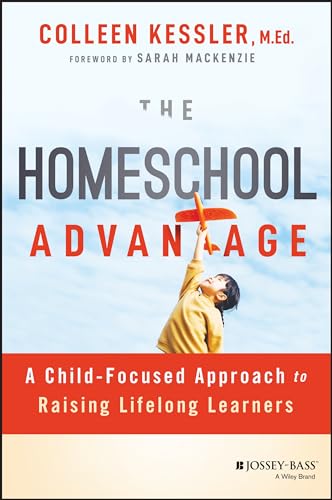
 The Homeschool Advantage: A Child-Focused Approach to Raising Lifelong Learners
 The Advantages of Home Schooling
 Science ~ Southwestern Advantage / Great American , Inc. (Southwestern Advantage...
 Homeschool Advantages: Spiritual, social and academic
 Homeschooling. Homeschooling Guide. Homeschooling Comprehensive Guide Includes: ...





 The Homeschooling Advantage: Empowering Your Child’s Education Beyond the Classr...
