A look at the battle for the homeschooling movement and the demographics of homeschooling families that challenges the notion that all homeschoolers are conservative fundamentalists. This article is a critical look at the HSLDA.
Colorado law requires that every child who is 6 years old on or before August 1 of the current school year, and under the age of 17, must attend school. If a homeschool is operating under Colorado’s home education statute (Option 1), the parents may wait to begin actual instruction until their child is 7 years old; however, they must still submit a notice of intent beginning with the school year that the child turns 6 by August 1.
The education establishment has realized that the socialization issue will be seen for the red herring that it is, and has searched for other means to suppress homeschooling. Two new strategies have emerged, and these pose real threats to homeschooling. The first strategy is to argue that homeschooling needs some form of accreditation. A number of reasons have been offered: it eases the transition back to the public school for those homeschoolers who go back, it is the basis for awarding a recognized diploma, and it makes it easier to provide homeschoolers access to public school programs and facilities such as science classes, libraries, sports, etc. But accreditation is simply another word for conforming, and the desire to not conform is the fundamental reason for choosing to homeschool. Homeschoolers as a group will not be seduced nor will they be tricked by the false promises of accreditation. The second strategy for suppressing homeschooling is one that is much more likely to be successful, and it is to drastically limit homeschoolers’ access to public higher education. In this, the education establishment has discovered its only effective weapon against homeschooling.
Extracurricular and interscholastic activities. Notwithstanding any other provision of this article, each school district and each public school, subject to the requirements of this section, shall allow any student enrolled in a school or participating in a nonpublic home-based educational program to participate on an equal basis in any activity offered by the school district or the public school that is not offered at the student's school of attendance or through the student's nonpublic home-based educational program. A school district or school shall not adopt or agree to be bound by any rule or policy of any organization or association that would prohibit any participation allowed by this section. Each nonpublic school may allow a student to participate in a particular activity offered by the nonpublic school, at the nonpublic school's discretion.
A look at the statutes governing homeschooling in Colorado, provided by Christian Home Educators of Colorado (CHEC). This explanation details the three options to homeschool your children in the state of Colorado.
If you want to start homeschooling during the school year and your child is currently enrolled in a public or private school, you may formally withdraw your child from that school. If you are going to start homeschooling after the school year is over, and your child is considered enrolled for the following year, we recommend that you withdraw your child before the next school year begins, so that the school does not mark your child as absent or truant.
The general assembly hereby declares that it is the primary right and obligation of the parent to choose the proper education and training for children under his care and supervision. It is recognized that home-based education is a legitimate alternative to classroom attendance for the instruction of children and that any regulation of nonpublic home-based educational programs should be sufficiently flexible to accommodate a variety of circumstances. The general assembly further declares that nonpublic home-based educational programs shall be subject only to minimum state controls which are currently applicable to other forms of nonpublic education.
Details of the state of Colorado requirements for immunizations.
Good records equip your student with proof of education for continuing their education, entering the military, or passing an employer’s background check. It may also prove valuable if there are ever any questions about your homeschool.
Recognition of April 8, 2005, as Home Education Day in Colorado.
Christian Home Educators of Colorado (CHEC), is a non-profit, Christian organization, dedicated to providing information, resources and leadership to all families involved in home-centered education. Offers information, annual conference, Day at the Capitol, speech and debate activities, spelling and geography bee, graduation ceremonies, and a magazine.
The greatest obstacle pioneering homeschoolers faced two decades ago was daunting: in most states home education wasn't legal. This article details five of the most significant cases that have become landmark decisions in the move towards homeschooling freedoms: the DeJonge case in Michigan, the Jeffery case in Pennsylvania, the Diegel case in Ohio, the Triple E case in South Carolina, and the Calabretta case in California.
This list is an opportunity for homeschoolers to contact homeschooling attorneys and experts about homeschooling legal and litigation issues. It is an informal network of attorneys and legal experts that are concerned with litigation pending and threatened against homeschoolers. Its primary purpose is to exchange legal information within the profession, and to educate and support attorneys and experts involved in homeschool litigation.
An advisory group concerned with educating people about the need to eliminate government involvement in education and the rights of parents to educate their own children. On this site, you will find a public proclamation for the separation of school and state, which you can sign.
Homeschool Watch is an email list where articles, incidents, and current legislation impacting homeschoolers can be posted and practically discussed. The list purpose is to efficiently inform, network and support the efforts of homeschoolers across the nation to keep homeschooling free. This is intended to be a list for homeschoolers actively working on legislative issues and not a theoretical debate society.
In Colorado, there are three options under which you can legally homeschool. You are free to choose the option that best meets your family’s needs. These options include homeschooling under Colorado's homeschool statute, homeschooling with an independent school, and homeschooling with a certified teacher.
For some years, the Social Security Administration has permitted home schoolers to receive benefits in some cases. The agency used a fuzzy test involving several different factors. New documents from the Social Security Administration indicate that the agency has a much better defined policy in place now.
In Pierce v. Society of the Sisters, the U.S. Supreme Court ruled that "the fundamental theory of liberty upon which all governments of this Union repose excludes any general power of the state to standardize its children by forcing them to accept instruction from public teachers only. The child is not the creature of the state."
This list is an opportunity for homeschoolers involved in custody issues to contact other homeschoolers for information about homeschooling attorneys and experts, as well as exchange ideas and information about handling custody disputes as a result of homeschooling.
Concerned Parents of Colorado (CPCO) was formed in 1987 for the express purpose of writing and helping to pass homeschool legislation. With the enactment of SB 56 in 1988, CPCO has continued to monitor the legislature for the homeschooling community. CPCO helps to maintain a strong homeschool lobby and presence at the state capitol, the Governor’s office, and with school organizations around the state. CPCO works on the local, state, and federal levels to ensure homeschool freedoms and provides legislative assistance and training to other states upon request. CPCO provides legislative and homeschool information to state organizations, individuals, and support groups throughout Colorado.
Regulations concerning exemptions from required immunizations in the state of Colorado.
Children participating in a non-public, home-based education program are allowed equal access to the public school’s extracurricular and interscholastic activities according to Colorado Revised Statutes § 22-33-104.5(6) and Colorado Revised Statutes § 22-32-116.5.
While many parents may not have the opportunity to influence legislation regarding home education on the state level, there are ways to be involved on a local level.
The Association of HomeSchool Attorneys (AHSA) provides a list of attorneys who consult with and/or represent homeschoolers.
This statute relates to state of Colorado school entry immunization requirements.
There is a national campaign to institutionalize all preschoolers through government funded and/or mandated "universal preschool." This group seeks to redefine universal preschool as an unheralded worldwide community of loving, functional parents who exercise their right and authority to nurture and teach their young children at home.
Details the importance of support alternative educational choices, including private schools and vouchers, along with homeschooling.
Online access to complete text of Colorado statutes. Those pertaining to home education include: 22-33-104 (Compulsory school attendance); 22-33-104.5 (Home-based education - legislative declaration - definitions - guidelines); 22-7-409, 1.2-d-III (Assessments); and 22-32-116.5 (Extracurricular and interscholastic activities).
If you are homeschooling a child with special needs, you need to follow your state’s homeschool regulations. There are no additional requirements for homeschooling children with special needs.
Pacific Justice Institute is a non-profit legal defense organization specializing in the defense of religious freedom, parental rights, and other civil liberties. PJI provides free representation to parents who are unlawfully denied the right to homeschool their children. PJI also provides legal counsel to those parents wishing to homeschool, but do not know their legal options or obligations.
As their ranks increase, homeschoolers are tapping public schools for curriculum, part-time classes, extracurricular services, and online learning.
Need a map for your homeschooling journey in Colorado? This classic go-to compendium used by countless families in Colorado is now completely updated and streamlined for you. The CHEC Homeschool Guidebook will give you tons of practical information, worksheets, resource lists, scriptural encouragement, and more – just what you need to homeschool in Colorado with confidence.
Families homeschooling for the first time inevitably have questions about legal challenges or threats that they might face from local or state education authorities. Those who do seek an answer to these questions are often faced with a confusing array of laws, policies, and regulations that not only vary from state to state, but also between school districts, and school officials within the same state or district.
Some veteran home educators seem to take a firm stand on principles that others don't even recognize as issues. Is it that they are just stubborn, rebellious, or cantankerous? Probably not.
Every important movement or trend in this country was followed by an onslaught of legislative actions which resulted in some legal stipulations that controlled the trend. What is really of concern is that this legislative control is not static, but very fluid, subject to change (meaning more restrictions in many cases). These changes occur through either more legislative actions on the part of the government or through interpretation in the judicial system. Currently, the homeschool movement is being closely monitored by various teacher unions, the public and legislative bodies throughout the United States, resulting in more and more laws being passed to control or monitor the movement. If the homeschool movement is to survive in a manner which we feel would be beneficial to us and society as a whole, we have to be more and more diligent in protecting our rights. The only way we can do this is to be more active in the political process. The question now becomes, how do we do this?
The Home School Legal Defense Association provides a brief summary of the homeschooling laws in Colorado. Includes a link to a legal analysis of laws relating to homeschooling in Colorado.
Northern Colorado Homeschool Association (NCHA) is a non-profit group for homeschooling parents and children of all ages. The majority of our families live along the Northern Colorado Front Range (Fort Collins, Windsor, Loveland Area). We are an inclusive, secular, eclectic, local, member-run organization that honors the diversity of homeschoolers and provides a supportive community for our members.
Colorado Department of Education has compiled information regarding home education in the state. Includes information about getting started homeschooling, subjects to teach, attendance requirements, recordkeeping, assessment and evaluations, and resources.
This how to begin homeschooling guide is presented by CHEC, Christian Home Educators of Colorado. It details the basics, with the first steps for you to take and lots of great information to get started homeschooling in Colorado.
Compulsory school attendance in the state of Colorado.
 The 8 Laws of Health: Educational, Coloring & Activity Book for Children
 Common Law Handbook: For Juror's, Sheriff's, Bailiff's, and Justi...
 Tales to Tell your Parents: Inspiring bedtime stories based on the 5 Biological ...
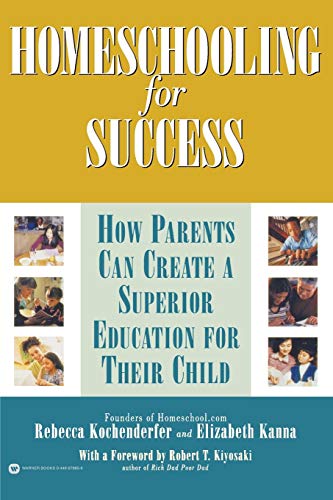
 Homeschooling for Success: How Parents Can Create a Superior Education for Their...
 Monster: A Story About Crime, Justice, and Life on Trial
 A More Perfect Union: The Story of Our Constitution ― A Simple American History ...



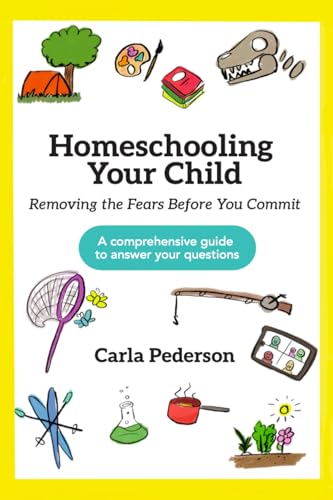


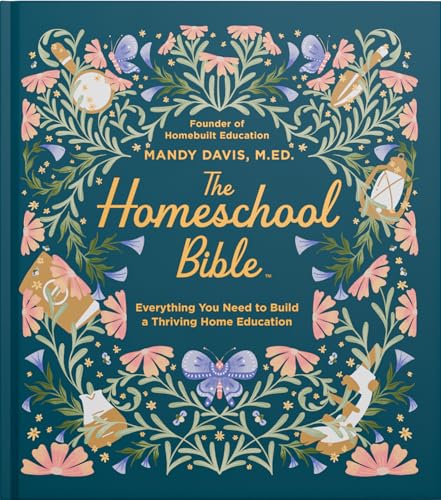
 The Homeschool Bible: A Practical Guide to Homeschool Curriculum, Lesson Plannin...
 Mark Twain Forensic Investigations Workbook, Using Science to Solve High Crimes ...
 The Law of God: For Study at Home and School
 The Practical U.S. Homeschool Parent’s Handbook: Navigate State Laws, Choose the...
 Homeschool Hours Log Book: For Missouri Moms to Plan and Document Law Requiremen...